
No, they are not. And if your dealership told you they were, that is one of the most expensive pieces of advice you will ever receive. “Lifetime transmission fluid” does not mean what most drivers think it means. In many cases, it means the fluid will last for the lifetime of the warranty, not the lifetime of your vehicle.
At Valley City Automotive in Eau Claire, WI, this is one of the most common topics that comes up during courtesy inspections. Drivers bring in vehicles with 80,000, 100,000, even 150,000 miles on the clock and have never had certain fluids serviced. By that point, the damage is already happening from the inside.
This post breaks down what “lifetime fluids” really are, why they break down faster than manufacturers admit, and what Wisconsin driving conditions are doing to your vehicle’s fluid systems right now.
The "Lifetime Fluid" Myth, Debunked
Let’s set the record straight. When automakers use the phrase “lifetime fluid,” they typically mean the expected service life of the vehicle under standard driving conditions. But real-world heat, towing, stop-and-go traffic, and cold-climate driving accelerate degradation well beyond what that label assumes.
Your vehicle does not stop aging at 100,000 miles. Neither does the fluid inside it.
Here is what is actually happening in your transmission, differential, and cooling system as the miles stack up:
- Heat cycles: Every time your engine runs, fluids heat up and cool down. This thermal cycling gradually breaks down the additive package inside the fluid.
- Moisture absorption: Brake fluid is hygroscopic, meaning it actively absorbs moisture from the air. Over time, that moisture lowers its boiling point and promotes internal corrosion throughout the brake system.
- Coolant inhibitor depletion: Coolant degrades differently. As it ages, its corrosion inhibitors deplete, causing the fluid to become more acidic and corrosive to the metal components it was designed to protect.
- Mechanical wear particles: Transmission and differential fluids collect tiny metal shavings from normal gear operation. Those particles do not disappear. They circulate and accelerate wear.
- Oxidation: Exposure to heat and oxygen causes fluid to thicken, darken, and lose its lubricating and protective properties.
None of that stops at any mileage threshold.
Wisconsin Roads Are Especially Hard on Your Fluids
If you are driving in Eau Claire, Altoona, Lake Hallie, Seymour, Mondovi, Elk Mound, or anywhere else in the Chippewa Valley, your fluids are working harder than those of a driver in a warmer climate. Here is why:
Cold Starts Are Brutal on Transmission Fluid
When temperatures drop into the single digits or below zero, transmission fluid thickens significantly before it warms up. That means for the first few minutes of every cold start, your transmission is operating with reduced lubrication. Repeat this hundreds of times per year and the cumulative effect on worn fluid is significant.
Road Salt and Moisture Contaminate Brake Fluid Faster
Wisconsin’s winter road treatments introduce a heavy moisture environment under your vehicle. Brake fluid, which already absorbs moisture naturally, picks up contamination faster in this climate. Compromised brake fluid lowers your brake system’s boiling point, which is exactly the wrong thing to have happen when you are trying to stop on an icy road.
Towing and Hauling Accelerate Fluid Breakdown
A lot of drivers in the greater Chippewa Valley use their trucks for work, trailering, or hauling. Towing pushes transmission temperatures significantly higher than normal driving. Heat is the number one accelerant of fluid degradation. This is especially true for diesel truck owners running Duramax, Powerstroke, or Cummins engines. These platforms are built to haul, but that capability comes at a cost to transmission fluid life. If you are putting your diesel to work regularly across the Chippewa Valley, your fluid service interval should reflect that workload, not the sticker in your owner’s manual.
The Fluids You Should Never Leave on a "Check It Later" Schedule
Not all fluids are equally at risk, and the vehicles we see most at Valley City Automotive, Chevrolet Silverados, Ford F-150s, Jeep Grand Cherokees, Toyota Camrys, Honda CR-Vs, and Subarus of every variety, all share the same vulnerability: fluid services that have been skipped, delayed, or written off as “lifetime.” Here are the ones that cause the most expensive problems when neglected:
Transmission Fluid
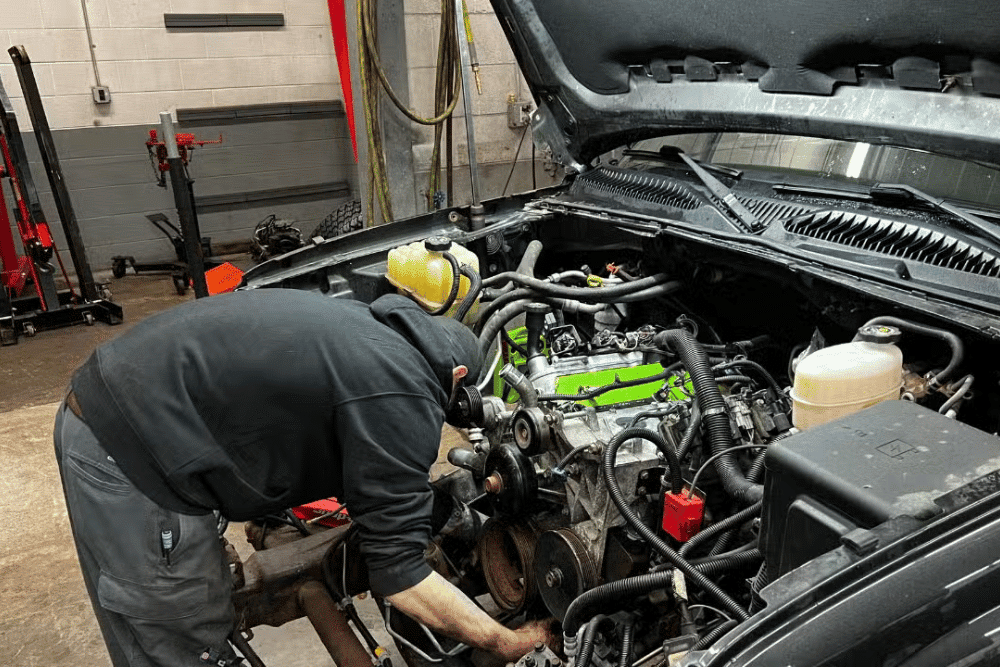
The most expensive repair in your drivetrain is also the most commonly neglected fluid service. Transmission fluid lubricates the clutch packs, planetary gearsets, and bearings inside your transmission while also acting as the hydraulic fluid that controls every shift. Degraded fluid causes slipping, harsh shifts, and eventually internal damage that no fluid change can reverse.
Valley City Automotive recommends a transmission fluid service every 40,000 miles. If you do not have documentation that it has been done, assume it has not.
Differential and Transfer Case Fluid
Four-wheel drive and all-wheel drive vehicles have multiple fluid reservoirs that drivers rarely think about. The front differential, rear differential, and transfer case all contain gear oil that breaks down just like transmission fluid. Neglecting these services wears out bearings and gears silently, until they are not silent anymore.
We recommend these fluids be serviced every 40,000 miles as part of a complete drivetrain maintenance approach.
Coolant
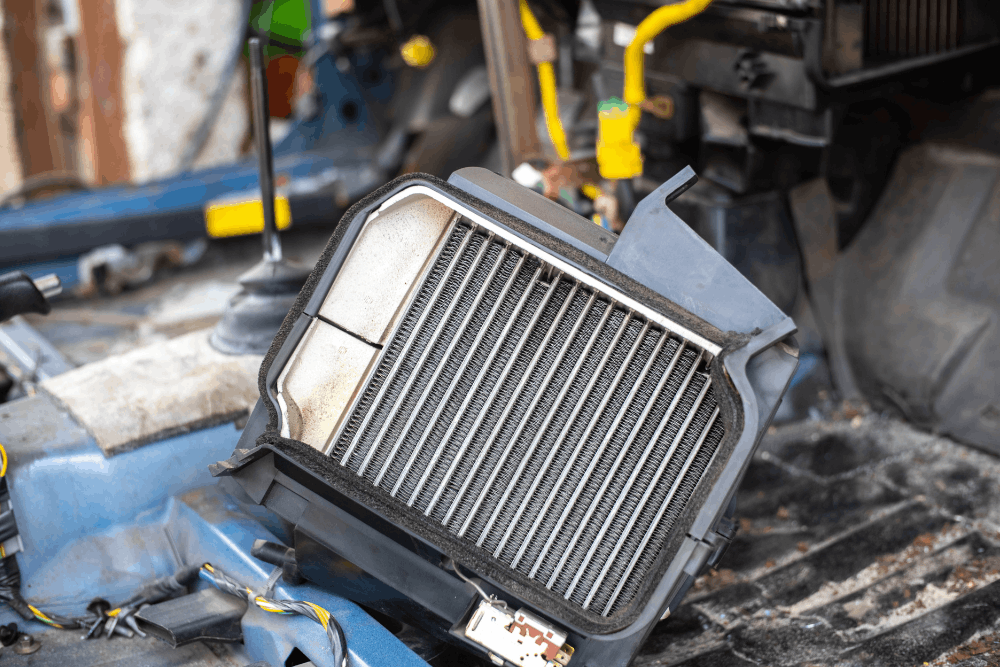
Coolant does not just keep your engine from overheating. It also contains corrosion inhibitors that protect your radiator, water pump, heater core, and metal engine passages. As coolant ages, those inhibitors deplete. Acidic coolant begins eating away at the components it is supposed to protect.
Coolant service is typically recommended every 4 years, regardless of mileage. If you have never had it done and your vehicle is more than four years old, it is due.
Power Steering Fluid
Power steering fluid is often forgotten entirely because problems do not announce themselves early. The fluid gradually darkens and becomes contaminated with debris from normal system operation. Maintaining clean, functional power steering fluid protects the pump and rack, components that are expensive to replace.
What Amsoil Has to Do With All of This
Not all fluids are created equal, and this is where the conversation gets interesting for drivers who are serious about long-term vehicle health.
At Valley City Automotive, we use Amsoil synthetic lubricants as our fluid product line. Here is why that matters for your vehicle:
- Superior thermal stability: Amsoil synthetics are engineered to maintain their protective properties across a much wider temperature range than conventional fluids. In Wisconsin’s climate, that makes a measurable difference.
- Extended additive life: The additive packages in synthetic fluids last longer, which means better protection at higher mileages.
- Cleaner operation: Synthetic fluids resist oxidation and breakdown better, which keeps your fluid systems cleaner between services.
Choosing the right fluid matters as much as keeping it on schedule. If you are running factory fill fluids that have never been serviced, you are working with two strikes against you already.
How Valley City Automotive Handles Fluid Services
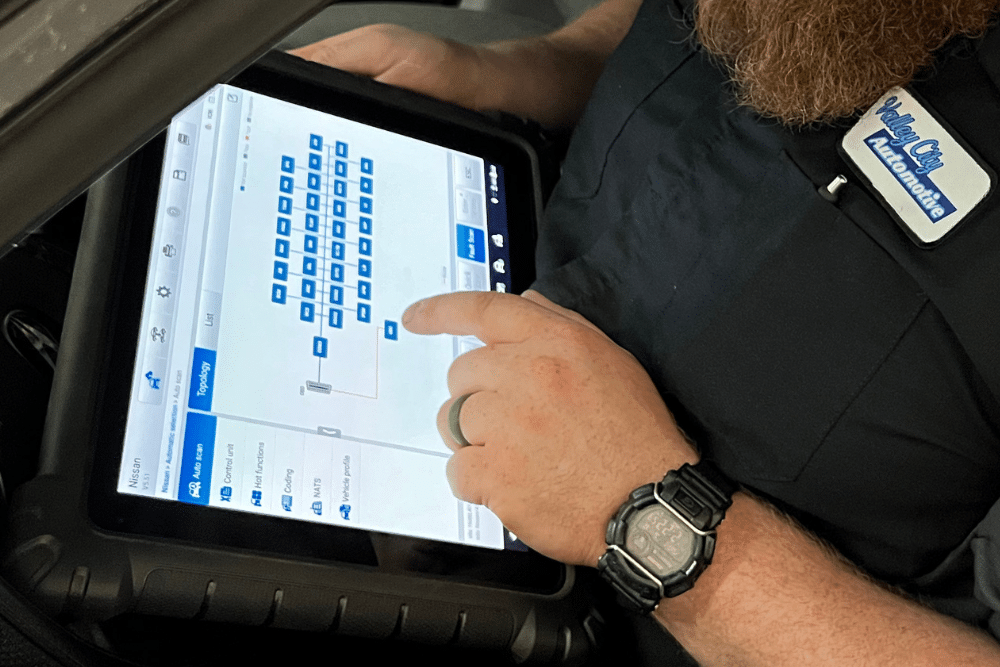
Ready to take a closer look at where your vehicle’s fluid services actually stand? Every vehicle that comes into Valley City Automotive receives a courtesy digital vehicle inspection, which includes a review of fluid conditions with photo documentation. You will see exactly what we see, with no guesswork and no pressure.
Christian Beyer, Valley City Automotive’s owner and an ASE Master Technician with L1 and L3 certifications, built this shop around one idea: help customers seek to understand before making decisions. Fluid services are one of the clearest examples of that philosophy in action. We show you the condition of your fluids, explain what it means for your vehicle, and give you an honest recommendation.
We back every service with a 60-month/60,000-mile warranty through TechNet, and courtesy loaner vehicles are available if your vehicle needs more time in the shop.
Stop by or give us a call to get on the schedule at Valley City Automotive, located at 1330 Menomonie St., Eau Claire, WI 54703, and reach us by phone at 715-598-7045.
Signs Your Fluids May Already Be Overdue
You do not always need a mileage chart to know something is off. Watch for these warning signs:
- Transmission shifting that feels rough, delayed, or hesitant
- A burning smell after hard driving or towing
- Steering that feels stiffer or noisier than usual
- Brake pedal that feels soft or spongy
- Engine running warmer than normal
- Dark, discolored fluid on the dipstick or during a fluid check at your service visit
If any of these sound familiar, do not wait. Fluid damage compounds quickly. This goes double for fleet vehicles and work trucks that log high miles, carry loads, or run multiple drivers. Fleet maintenance is one of the most overlooked areas where fluid neglect turns into downtime, and Valley City Automotive works with fleet operators across the Eau Claire area to keep those vehicles on the road and on schedule.
FAQs About Lifetime Fluid and Preventative Maintenance
Do “lifetime” vehicle fluids really last forever?
No. “Lifetime” does not mean a fluid will last forever or for as long as you own your vehicle. Heat cycles, oxidation, moisture, contamination, and normal mechanical wear gradually break fluids down. Real-world conditions like Wisconsin winters, stop-and-go driving, towing, and hauling can accelerate that process even further.
Which vehicle fluids need to be changed regularly?
Several fluids require regular service, including transmission fluid, differential and transfer case fluid, coolant, and power steering fluid. Valley City Automotive recommends transmission, differential, and transfer case fluid service every 40,000 miles, while coolant is typically serviced every four years. Your vehicle’s condition and how you drive can also affect when service is needed.
How do I know when my vehicle fluids need to be changed?
Warning signs can include rough or delayed shifting, a burning smell after driving or towing, stiff or noisy steering, a soft or spongy brake pedal, an engine running warmer than normal, or dark and discolored fluid. A fluid inspection can also identify deterioration before noticeable symptoms develop.
Where can I get car fluid services in Eau Claire, WI?
Valley City Automotive provides car fluid services in Eau Claire, WI, at 1330 Menomonie St. Every vehicle receives a courtesy digital vehicle inspection that includes checking fluid conditions with photo documentation. The shop serves drivers throughout Eau Claire, Altoona, Lake Hallie, Seymour, Mondovi, Elk Mound, and the greater Chippewa Valley.
What happens if you skip fluid maintenance for too long?
Old or contaminated fluids lose their ability to lubricate, cool, clean, and protect critical vehicle components. Over time, this can contribute to corrosion, overheating, accelerated wear, damaged bearings and gears, transmission problems, and other costly repairs. Staying on top of fluid maintenance helps protect these systems before deterioration leads to component damage.
Schedule Your Preventative Maintenance in Eau Claire, WI Today
Your vehicle’s fluid systems are working every single mile, and they cannot do their job without quality fluid in good condition. At Valley City Automotive, we make fluid services straightforward, transparent, and documented. No surprises, no upselling, just an honest look at what your vehicle needs.
Schedule your preventative maintenance service at Valley City Automotive, 1330 Menomonie St., Eau Claire, WI 54703. Call us at 715-598-7045 to get on the schedule. We serve drivers across Eau Claire, Altoona, Lake Hallie, Seymour, Mondovi, and Elk Mound.