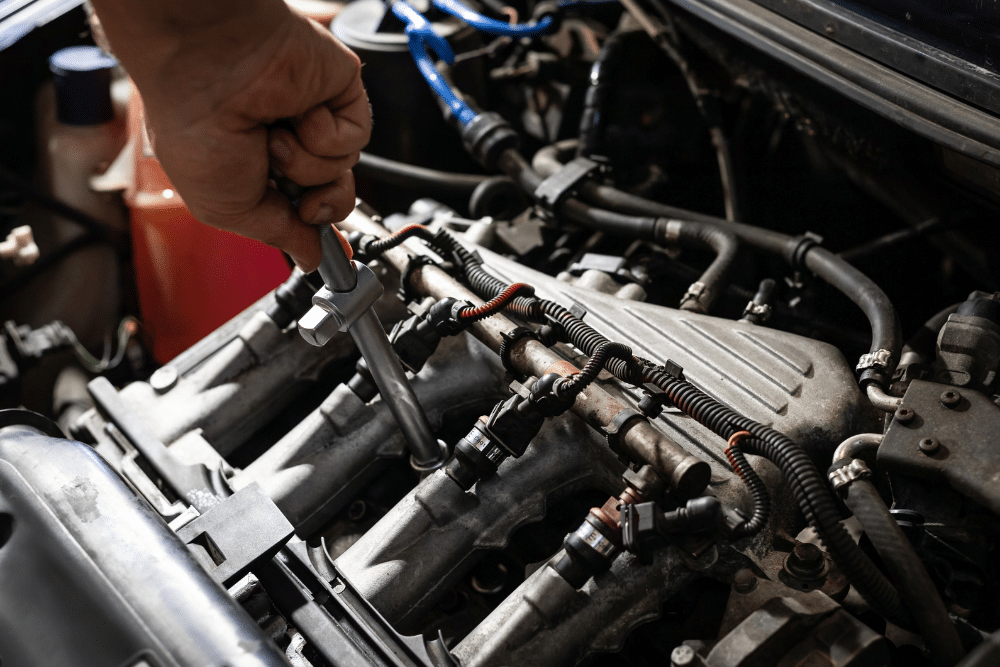
Fuel induction cleaning is a maintenance service that removes carbon and varnish buildup from your engine’s intake valves, throttle body, and fuel injectors, restoring the airflow and fuel delivery your engine needs to run at its best. If your vehicle has been hesitating at acceleration, idling roughly, or losing fuel economy, that buildup may be the reason.
At Valley City Automotive, we help Eau Claire drivers understand what’s happening inside their engines so they can make confident, informed decisions about their vehicle’s care. This post walks you through what fuel induction cleaning is, why it matters, and how to know when your engine needs it.
What Is Fuel Induction Cleaning and Why Does It Matter?
Your engine needs two things to run well: clean air and properly delivered fuel. The fuel induction system is the network of components that manages both, including the throttle body, intake valves, and fuel injectors. Over time, carbon deposits and varnish build up on these parts and restrict the airflow and fuel delivery your engine depends on.
This buildup happens naturally. Every time your engine runs, combustion byproducts leave residue behind. That residue gradually narrows the passageways your engine uses to breathe and feed itself.
Fuel induction cleaning is a professional service that removes those deposits. It restores proper airflow, improves fuel delivery, and brings your engine back to the response and efficiency it had when it was clean.
How Wisconsin Winters Accelerate Carbon Buildup in Eau Claire Engines
Wisconsin winters are hard on vehicles. Cold starts, short trips, and stop-and-go driving in Eau Claire traffic create the exact conditions that speed up carbon accumulation. When your engine runs cold or never fully reaches operating temperature, combustion is less efficient. Unburned fuel and oil vapor settle on intake valves and injectors instead of being burned off.
If you drive a lot of short distances during winter, those deposits build up faster than they would under normal highway conditions. By the time spring arrives, you may already be dealing with noticeable performance changes.
Signs That Carbon Buildup Is Affecting Your Vehicle in Eau Claire
You don’t need to pop the hood to know something is off. Carbon buildup rarely announces itself all at once. It builds gradually, and the symptoms can be easy to dismiss as “just how the car drives now.” That’s exactly how small performance issues turn into bigger ones.
Here are the most common signs your fuel induction system needs attention:
- Rough or uneven idle: The engine stumbles or shakes at a stoplight, especially when it’s cold
- Hesitation during acceleration: There’s a noticeable lag or stumble when you press the gas
- Reduced fuel economy: You’re filling up more often without a clear reason why
- Loss of power under load: Merging onto the highway or climbing a hill feels harder than it should
- Check engine light: Codes related to misfires or lean fuel conditions can point directly to induction system deposits
Any one of these symptoms is worth having evaluated. If you’re seeing more than one at the same time, it’s a strong signal that carbon buildup is already affecting how your engine performs. The longer it goes unaddressed, the more strain it puts on other engine components.
Get your engine cleaned up before summer at Valley City Automotive, 1330 Menomonie St, Eau Claire, WI 54703, or call us at 715-598-7045 to schedule your fuel induction cleaning service.
Any one of these signs is worth taking seriously. Multiple signs together mean it’s time to act.
GDI Engines and Why They Need Extra Attention
Not all engines are created equal when it comes to carbon buildup. Gasoline Direct Injection engines, commonly called GDI engines, are especially vulnerable. In a GDI engine, fuel is injected directly into the combustion chamber rather than through the intake port. This means the intake valves never get washed by fuel the way they do in older port-injected engines.
Without that natural cleaning action, carbon deposits accumulate on the back of the intake valves much faster. Many newer vehicles on the road in Eau Claire use GDI technology, including popular commuter models and family vehicles.
Recommended Service Intervals for Fuel Induction Cleaning
The right interval depends on your engine type:
- GDI engines: Cleaning is recommended every 15,000 miles because carbon builds up faster without port washing
- Port-injected engines: Cleaning is recommended every 30,000 miles as deposits accumulate more slowly
If you’re not sure which type of engine your vehicle has or when it was last serviced, bring it in to Valley City Automotive, and we’ll check your service history to determine where you stand.
What Happens During a Fuel Induction Cleaning Service
Here’s what the process looks like and what it accomplishes:
- Cleaning solution is introduced into the induction system while the engine runs, targeting the throttle body, intake valves, and fuel injectors
- Carbon deposits and varnish dissolve as the solution works through the system
- Loosened deposits burn off through normal combustion, clearing the passageways your engine relies on
- Airflow and fuel atomization are restored, which translates to improved throttle response and smoother idle
This is not a do-it-yourself job. Over-the-counter fuel additives are not the same as a professional induction cleaning service. A professional service delivers the right concentration of cleaning agent to areas that a bottle poured into your gas tank simply cannot reach.
Why April Is the Best Time to Schedule a Fuel Induction Cleaning
April is National Car Care Month, and it’s one of the best times of year to address the engine issues that built up over a long Wisconsin winter. Temperatures are rising, road conditions are improving, and you’re likely putting more miles on your vehicle as schedules pick back up.
Addressing carbon buildup now means heading into spring and summer with an engine that’s running clean and efficient. The team at Valley City Automotive sees this pattern every spring across Eau Claire, Altoona, Lake Hallie, Seymour, Mondovi, and Elk Mound. You’ll notice it in the way your vehicle accelerates, how smooth it idles at a stoplight, and potentially in better fuel economy on your daily commute.
Why Drivers in the Chippewa Valley Choose Valley City Automotive
Drivers across Eau Claire and the Chippewa Valley trust us because we do more than fix cars. We combine advanced diagnostic testing with transparent communication and skilled repair work so every customer understands exactly what was found and what we did about it.
- 36-Month/36,000-Mile NAPA Warranty: Every qualifying repair is backed by our nationwide warranty for lasting peace of mind.
- ASE Master L1 and L3 Certifications: Our certifications reflect deep expertise in diagnostics and engine performance systems.
- EPA 609 Certification: We handle refrigerant services in full compliance with environmental regulations.
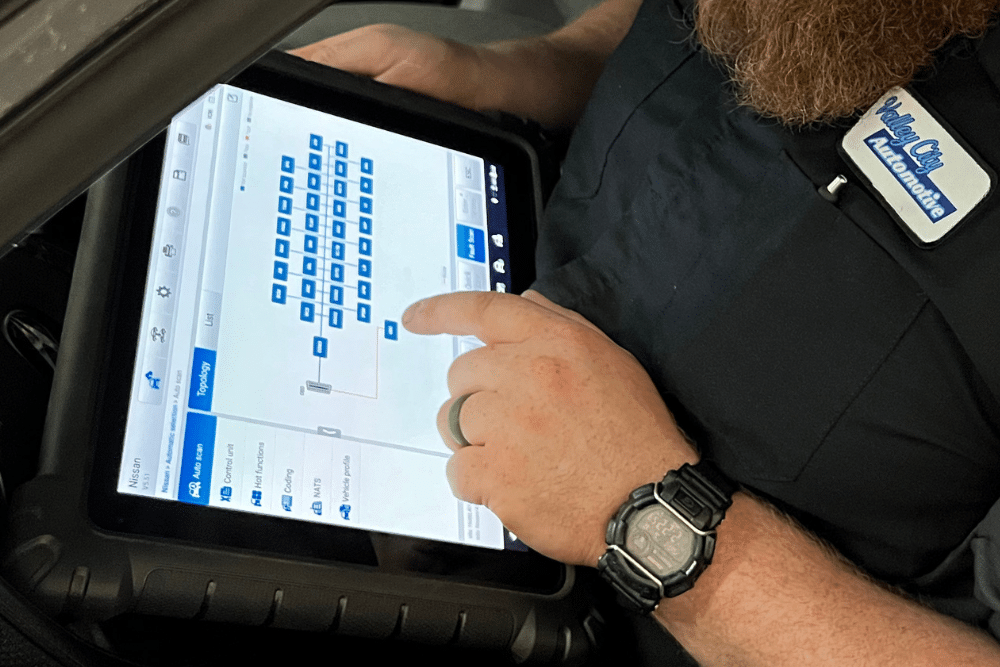
- Advanced Diagnostic Testing: We evaluate your engine thoroughly before recommending any service, so you know exactly what your vehicle needs.
- Courtesy Loaner Vehicles: Keep your day moving while your vehicle is in our care.
- After-Hours Drop-Off: Leave your vehicle on your schedule, not ours.
- Financing Available: Flexible payment options help you take care of your vehicle without delay.
FAQs About Fuel Induction Cleaning and Engine Service
Why does my car idle rough after winter in Wisconsin?
Rough idle after Wisconsin winters is commonly caused by carbon buildup on intake valves and fuel injectors from cold starts and short-trip driving. As temperatures drop, combustion efficiency decreases and deposits accumulate faster. A fuel induction cleaning can restore smooth operation.
How does carbon buildup affect spring performance?
Carbon deposits restrict airflow and fuel delivery, causing hesitation, reduced power, and poor fuel economy. The restriction worsens gradually, so drivers often don’t notice until performance has already declined. Cleaning the induction system restores proper engine function for the warmer driving season ahead.
Do GDI engines need more frequent induction cleaning?
Yes. GDI engines inject fuel directly into the combustion chamber, so intake valves never get the cleaning effect that fuel provides in port-injected engines. Carbon accumulates faster, and cleaning is generally recommended every 15,000 miles for these engines.
What symptoms mean I need fuel induction cleaning?
Key symptoms include rough idling, hesitation during acceleration, reduced fuel economy, and loss of power under load. A check engine light related to misfires or lean fuel conditions may also appear. Any combination of these symptoms is worth having evaluated by a technician.
Does induction cleaning improve fuel economy in spring?
It can. Removing carbon deposits from fuel injectors and intake valves restores the precise fuel atomization and airflow the engine needs for efficient combustion. Drivers with significant buildup often notice measurable improvement after a professional induction cleaning service.
Schedule Your Fuel Induction Cleaning in Eau Claire Today!
Your engine works harder than you realize, and carbon buildup is one of the most common reasons drivers notice a drop in performance after a Wisconsin winter. At Valley City Automotive, we combine advanced diagnostic testing with thorough, professional fuel induction cleaning to restore the engine response and efficiency your vehicle is capable of.
Every qualifying repair is backed by our 36-month/36,000-mile NAPA warranty, and we offer courtesy loaner vehicles and after-hours drop-off to make the process simple. 1330 Menomonie St, Eau Claire, WI 54703, call us at 715-598-7045, or schedule online to book your appointment today.